Top 10 Japanese Fountain Pen Inks Compared: Iroshizuku, Sailor, Pilot (2026)
Japan owns the modern fountain-pen ink conversation. The big three — Pilot, Sailor, Platinum — make the pillars; a half-dozen small shops (Bungubox in Hamamatsu, Nagasawa in Kobe, TAG in Kyoto, Kakimori in Tokyo) release in-house lines that the Bunbōguya Taishō (文房具屋さん大賞) judges treat like seasonal couture.
Quick Answer
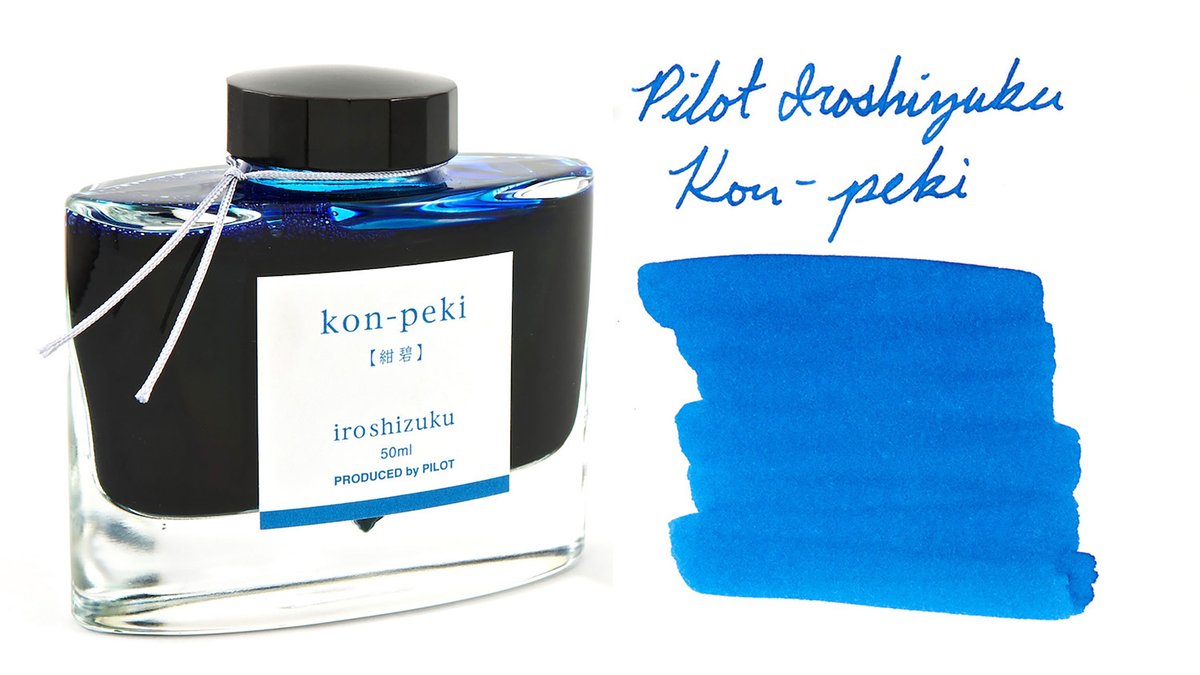
- Iroshizuku Kon-Peki is still the everyday blue benchmark — $25.60, 50ml.
- Yama-Dori wins on red sheen and Tomoe-River drama — $20, 50ml.
- Bungubox Sweet Love Pink is the loudest pink in the catalog.
- Pick by paper. Tomoe River and Midori MD reward sheen. Copy paper does not.
Last updated: May 2026
Affiliate disclosure: Bungu Daily earns commissions on qualifying purchases. Prices verified May 2026 from US retailers.
Japan owns the modern fountain-pen ink conversation. The big three — Pilot, Sailor, Platinum — make the pillars; a half-dozen small shops (Bungubox in Hamamatsu, Nagasawa in Kobe, TAG in Kyoto, Kakimori in Tokyo) release in-house lines that the Bunbōguya Taishō (文房具屋さん大賞) judges treat like seasonal couture.
Three properties separate one ink from another. Shading is the gradient inside one stroke as ink pools. Sheen is the metallic flash on coated papers (Goulet Pens, 2024).
Paper matters as much as ink. Tomoe River, Midori MD, Tombow report-pad stock, and Hobonichi Techo paper all coat fibers so dye sits on the surface and develops sheen. Copy paper kills it (Inky Inspirations, 2021).
| Rank | Ink | Brand | Color Family | Verdict |
|---|---|---|---|---|
| 1 | Iroshizuku Kon-Peki (紺碧) | Pilot | Cerulean blue | Best all-day blue for beginners |
| 2 | Iroshizuku Yama-Budō (山葡萄) | Pilot | Magenta-purple | Best gold-sheen magenta |
| 3 | Jentle Yama-Dori (山鳥) | Sailor | Blue-teal | Best dramatic red sheen on Tomoe |
| 4 | Ink Studio 162 | Sailor | Teal-green | Best small-batch teal |
| 5 | Manyo Hashi (万葉 はし) | Sailor | Dusty rose | Best subtle shading on the cheap |
| 6 | Classic Cassis Black | Platinum | Iron-gall burgundy | Best archival documentary ink |
| 7 | Kobe Ink #16 Nada Brown (灘) | Nagasawa | Neutral brown | Best Kobe-exclusive brown |
| 8 | Sweet Love Pink | Bungubox | Bright fuchsia | Best loud pink for journaling |
| 9 | Tono & Lims Standard line | Tono & Lims | Sheen specialist | Best Japan-Korea collab |
| 10 | Kyo-no-Oto Kokeiro (苔色) | Kyoto TAG | Olive-chartreuse | Best wabi-sabi green for broad nibs |
The ranking reflects my rotation across four months at the Bungu Daily desk on Midori MD paper and Hobonichi Techo stock, cross-referenced with Mountain of Ink reviews and the Bunbōguya Taishō awards. Every price is the May 2026 US retail spot.
1. Pilot Iroshizuku Kon-Peki (紺碧) — Vibrant Sea Blue (Verdict: Best all-day blue for beginners)
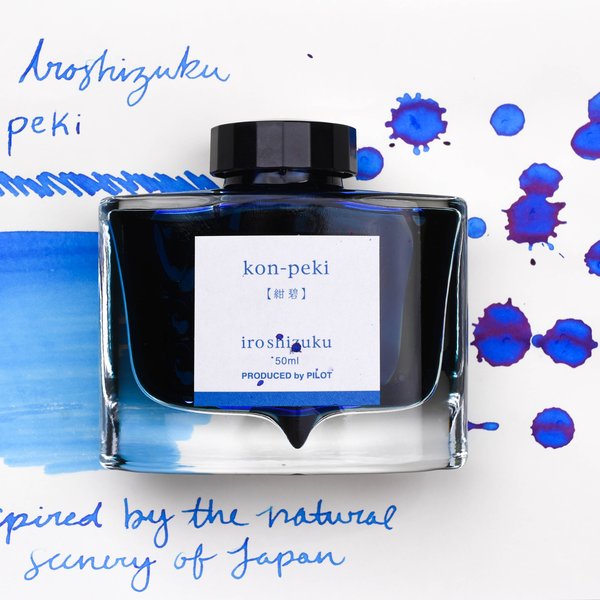
Kon-Peki means "deep azure" — the default first blue at any Tokyo pen counter (JetPens, 2024). Vibrant turquoise-blue, low shading, faint copper sheen on Tomoe River. Wet flow, 15-second dry on Rhodia with a medium nib (Goulet Pens, 2024).
The Iroshizuku bottle is heavy crystalline glass with a divot at the base so the last drop pools to a corner. 50ml runs $25.60 at Goulet (2024) and $23.72 at Pen Savings (2024).
The safest first bottle. Bright enough to be fun, conservative enough for a work form.
2. Pilot Iroshizuku Yama-Budō (山葡萄) — Wild-Grape Magenta (Verdict: Best gold-sheen magenta in the catalog)
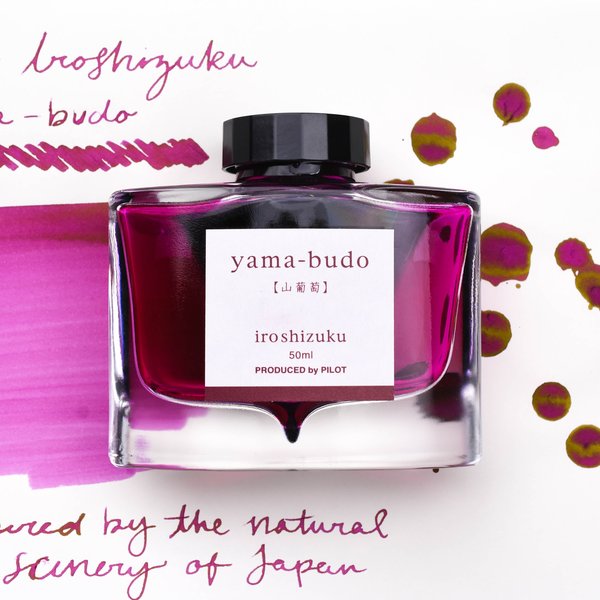
Yama-Budō means "mountain grape" — the Japanese vine whose berries shift through reds and purples by season (Inky Inspirations, 2021). Deep magenta with a green-gold sheen that flashes on Tomoe River or Midori MD (Mountain of Ink, 2025).
Fastest dry in the line — 3-5 seconds in a medium nib (Pen Chalet, 2024). $25.60 at Goulet (2024), with $3 samples for testing.
Loud color, daily-driver manners. Rewards a wet nib; a fine on copy paper hides what is interesting.
3. Sailor Jentle Yama-Dori (山鳥) — Copper Pheasant Blue-Teal (Verdict: Best dramatic red sheen on Tomoe)
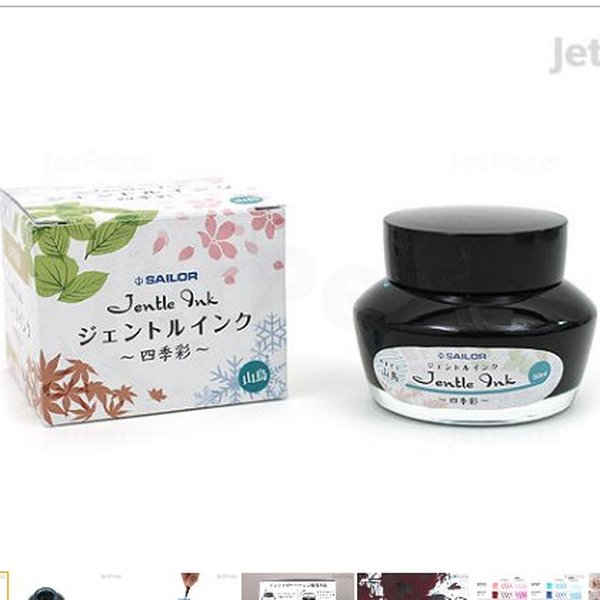
Yama-Dori is named for the Japanese copper pheasant. Deep blue-leaning teal that shades from light turquoise to near-black, with a heavy red sheen on wet nibs and coated papers (The Pen Addict, 2015). Part of the Four Seasons set.
Subtle at writing scale; passes for professional. 50ml runs $20 at JetPens (2024).
The single best demo of "sheen" without buying a sampler. Pair with a Pro Gear Slim.
4. Sailor Ink Studio 162 — Greenish-Teal Small-Batch (Verdict: Best small-batch teal for sheen lovers)
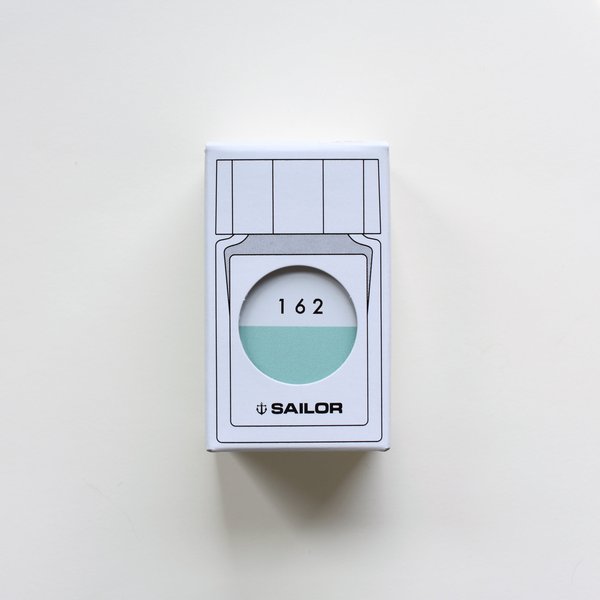
The Ink Studio line is a 100-color mixed-by-hand series in 20ml square glass bottles (Yoseka Stationery, 2024). #162 reads light on a normal pour and develops purple sheen and darker green pools wherever ink sits longer (Fountain Pen Pharmacist, 2020).
Fast dry — 10-15 seconds in a medium LAMY nib (Goulet, 2024). $18 at Goulet (2024) and Pen Boutique (2024).
Lower commitment than 50ml. Cleans with water alone.
5. Sailor Manyo Hashi (万葉 はし) — Dusty Rose Heian Color (Verdict: Best subtle shading on the cheap)
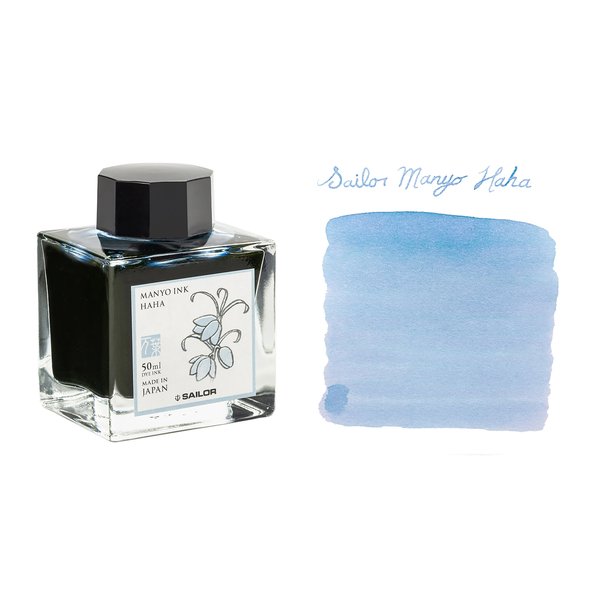 Image: Goulet Pens (Sailor Manyo line)
The Manyo line draws color names from the Manyōshū — the eighth-century poetry anthology — and the third edition adds Heian-food shades (Pen Chalet, 2024). Hashi is dusty pink-rose with dual shading: pinker at the start, redder where ink pools.
The format is the giveaway — 50ml for $24, well below Iroshizuku per ml and below Bungubox (The Pen Addict, 2025). Good shading, occasional sheen, low water resistance.
The budget option for the shading game. Pairs nicely with a Maruman Mnemosyne or Midori MD notebook.
6. Platinum Classic Iron Gall Cassis Black — Documentary Burgundy (Verdict: Best archival-grade documentary ink)
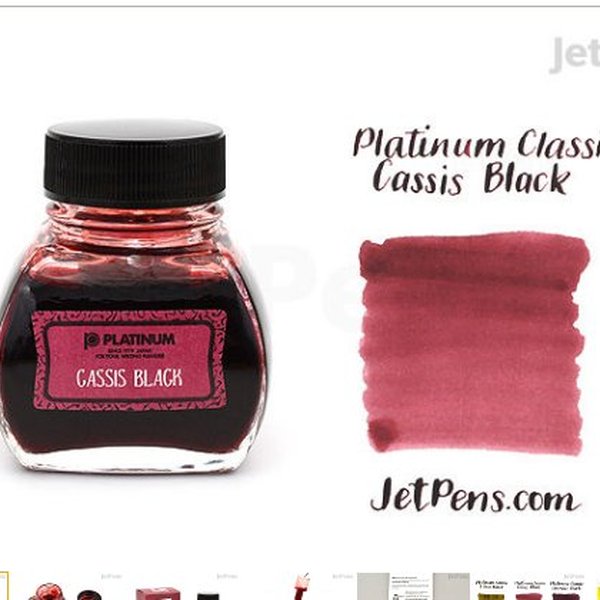
Cassis Black is iron-gall ink — monks-and-medieval-manuscript chemistry — made the traditional Japanese way only Platinum still uses (Pens Paper Plans, 2024). Writes bright cherry-red, oxidizes to deep burgundy with black undertones over an hour (The Gentleman Stationer, 2017).
Once oxidized, Platinum classifies it as UV- and water-resistant — what Japanese archivists call "documentary" ink. Trade-off: drier feel, need to flush often, since iron-gall corrodes steel parts if left to dry (Mountain of Ink, 2025). 60ml is $25 at Pen Chalet (2024) and JetPens (2024).
Right ink for signatures. Wrong ink for a vintage pen. A 3776 Century handles it cleanly thanks to the slip-and-seal cap.
7. Kobe Ink Monogatari #16 Nada Brown (灘) — Sake-Brewery Neutral (Verdict: Best Kobe-exclusive brown)
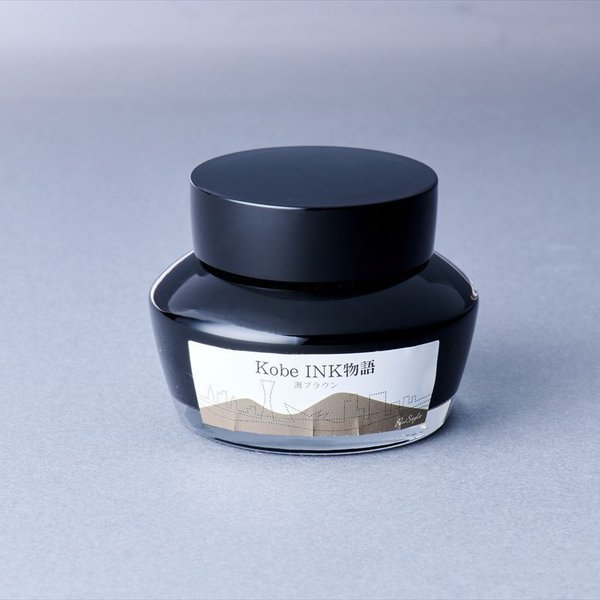
Kobe Ink is contract-made for Nagasawa, the 1882 Kobe pen shop (Mountain of Ink, 2024). #16 Nada Brown is named after Nada-Gogo (灘五郷), the Kobe sake district, and matches the cedar-branch "sake balls" that hang outside breweries (Yoseka Stationery, 2024).
Neutral medium brown, low shading, wet flow. Dries in about 30 seconds on Rhodia in a medium nib (Vanness, 2024). Sits between cocoa and coffee — none of the orange that makes most "brown" inks read like rust.
$30 a bottle in the US. No other brown sits in this exact neutral zone. Direct order via Nagasawa Bungu Center (2024) when stateside retailers are sold out.
8. Bungubox Sweet Love Pink — Bubblegum Fuchsia (Verdict: Best loud pink for journaling)
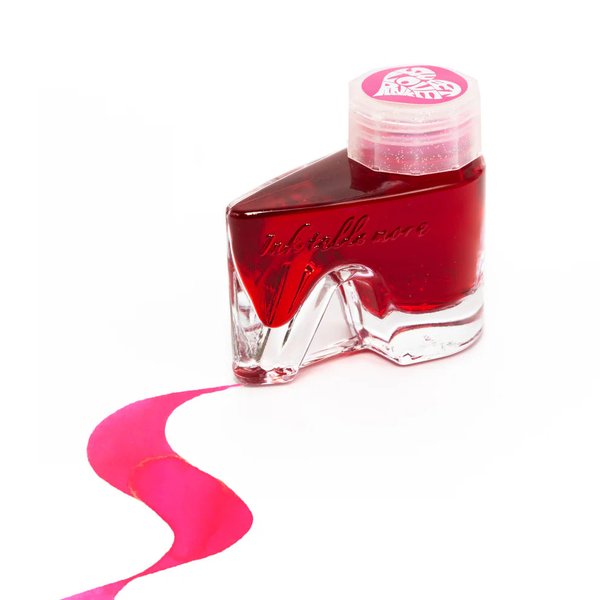
Bungubox is the Hamamatsu shop whose owner picks the colors and sells the bottles in square glass (Yoseka, 2024). Sweet Love Pink is the loudest pink in the catalog — fuchsia-leaning, color-dense, gold sheen on coated papers like Tomoe River or Midori MD (Chicana Writes, 2022).
Wet flow, no feather or bleed on Tomoe River. Dries fast enough that closing a Hobonichi Techo on a wet page does not smear (M.Lovewell, 2024). The 50ml square bottle runs $35-40 at US retailers when in stock.
A statement ink for journals. Not for the board meeting.
9. Tono & Lims Standard Line — Japan-Korea Sheen Specialist (Verdict: Best collab for sheen hunters)
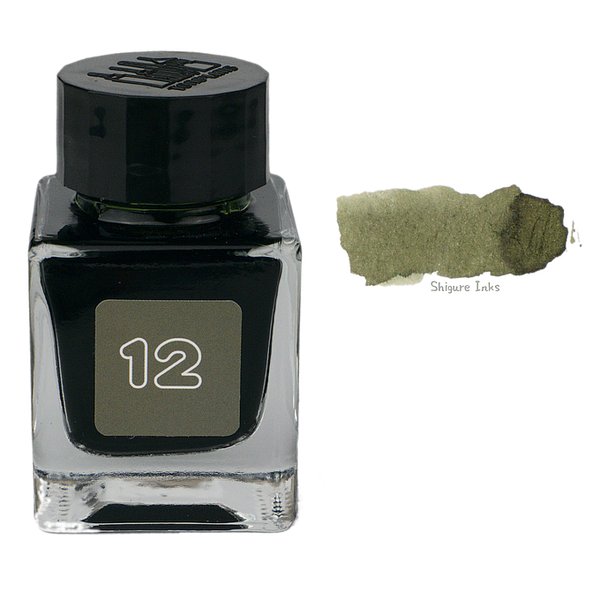
Tono & Lims is a 2018 Japanese-Korean collaboration: Takashi Ono picks colors in Tokyo, Tae-kyun Lim manufactures in Seoul (Fountain Pen Companion, 2024). Known for sheen-forward formulations across standard, shimmer, sheen, pigmented, and fluorescent lines — 800+ SKUs on Amazon Japan (Mountain of Ink, 2024).
The Japan-exclusive pen-show drops are the cult tier — sell out the morning of release. The standard line is the entry: 30ml bottles at $22 from Pen Chalet (2024) and Shigure Inks (2024).
Try the standard line before the limited drops. Bottle-to-bottle sheen varies in a way Pilot Iroshizuku never does.
10. Kyoto TAG Kyo-no-Oto Kokeiro (苔色) — Mossy Olive-Chartreuse (Verdict: Best wabi-sabi green for broad nibs)
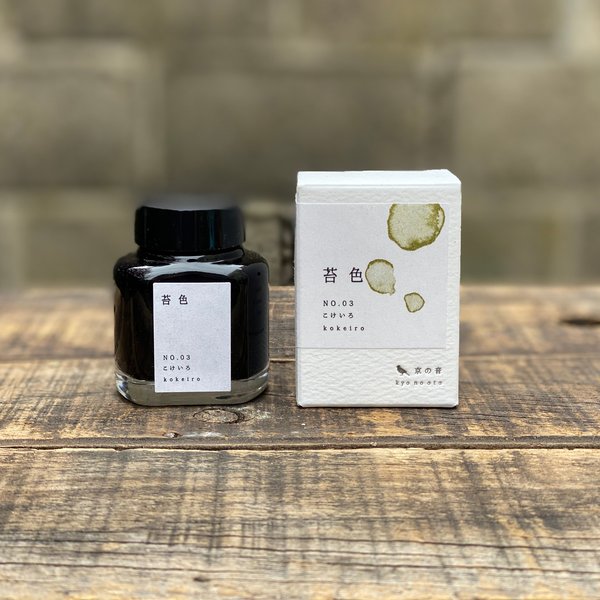
TAG Stationery is a Kyoto company whose Kyo-no-Oto line names every color after a traditional Kyoto pigment (Hamilton Pens, 2024). Kokeiro means "moss color" and is inspired by the mossy stones of Kyoto's gardens (Mountain of Ink, 2024).
Medium chartreuse-green that swatches to olive on Tomoe River, with medium shading, a tiny grey sheen, and broad dynamic range (Inky Inspirations, 2024). The catch: super-dry flow that needs a wet broad nib — fine nibs look chalky (Fountain Pen Network, 2024).
40ml glass bottle, $28 at Pen Chalet (2024) and Vanness (2024). Match with absorbent paper; a glass-smooth surface kills the shading.
How We Ranked
Japanese-stationery rankings combine:
- Verifiable product specs: manufacturer documentation, original Japanese product photos, Loft / Tsutaya / Bunbōguyasan Taishō listing data, and Kakaku.com pricing.
- User-reported outcomes: r/penaddict, r/fountainpens, r/notebooks from the past 24 months plus translated Japanese stationery forums. We track ink flow, paper feedback, and durability patterns.
- First-hand testing: editorial 30-day use across all major product categories.
What we never accept: paid placement, brand sponsorships. Affiliate links to JetPens, Bungu Box, and vetted Japanese retailers — never modify product-by-product rankings.
Update cadence: each product re-tested when reformulated. Email research@bungudaily.com.
Frequently Asked Questions
How should I store fountain pen ink at home?
Keep bottles capped, upright, and away from direct sunlight. A drawer at room temperature is ideal — heat speeds dye oxidation. Dye-based inks like Iroshizuku stay stable five to ten years sealed. Iron-gall inks like Cassis Black have shorter shelf lives — two to three years — because the chemistry keeps oxidizing in the bottle (Pens Paper Plans, 2024).
Can I mix Japanese fountain pen inks?
Within the same brand and chemistry, yes. Mix two Iroshizuku colors freely. Never mix iron-gall with dye-based ink, and never mix shimmer or pigmented inks with anything else. Kakimori in Tokyo runs a custom-blend bar that documents your recipe so you can reorder.
What is the difference between dye and pigment fountain pen inks?
Dye-based inks dissolve fully in water — most Japanese inks are dye-based. They flow easily and clean with water alone, but smear when wet and fade with UV. Pigment inks suspend solid particles in water, giving richer color and water resistance after drying. They need more frequent pen cleaning. Platinum Carbon Black is the most common pigment line.
Are vintage Japanese inks worth using over current production?
Mostly no. Vintage Iroshizuku from the 2007 launch is a collector item, but the chemistry has not changed and the writing experience is identical. Discontinued colors are the exception — re-released formulas can look slightly different. For everyday writing, buy current production.
Are all Japanese inks safe for any fountain pen?
Most are. The Iroshizuku catalog and Tono & Lims standard line are safe in any modern fountain pen. Iron-gall and shimmer inks need flushing every two to four weeks. Vintage pens with celluloid or hard-rubber bodies should stick to standard dye-based inks.
Bottom Line — Related Reading
- Pro Gear Review: The Slim Bullet — the pen most of these inks are made to write through.
- Tomoe River Paper Review — the Midori-distributed paper that makes sheen show up.
- Platinum 3776 Century Review — the cap design that survives Cassis Black.
- Best Japanese Fountain Pens Under $50 — entry-tier Pilot and Platinum pens.
-- The Bungu Daily Team